

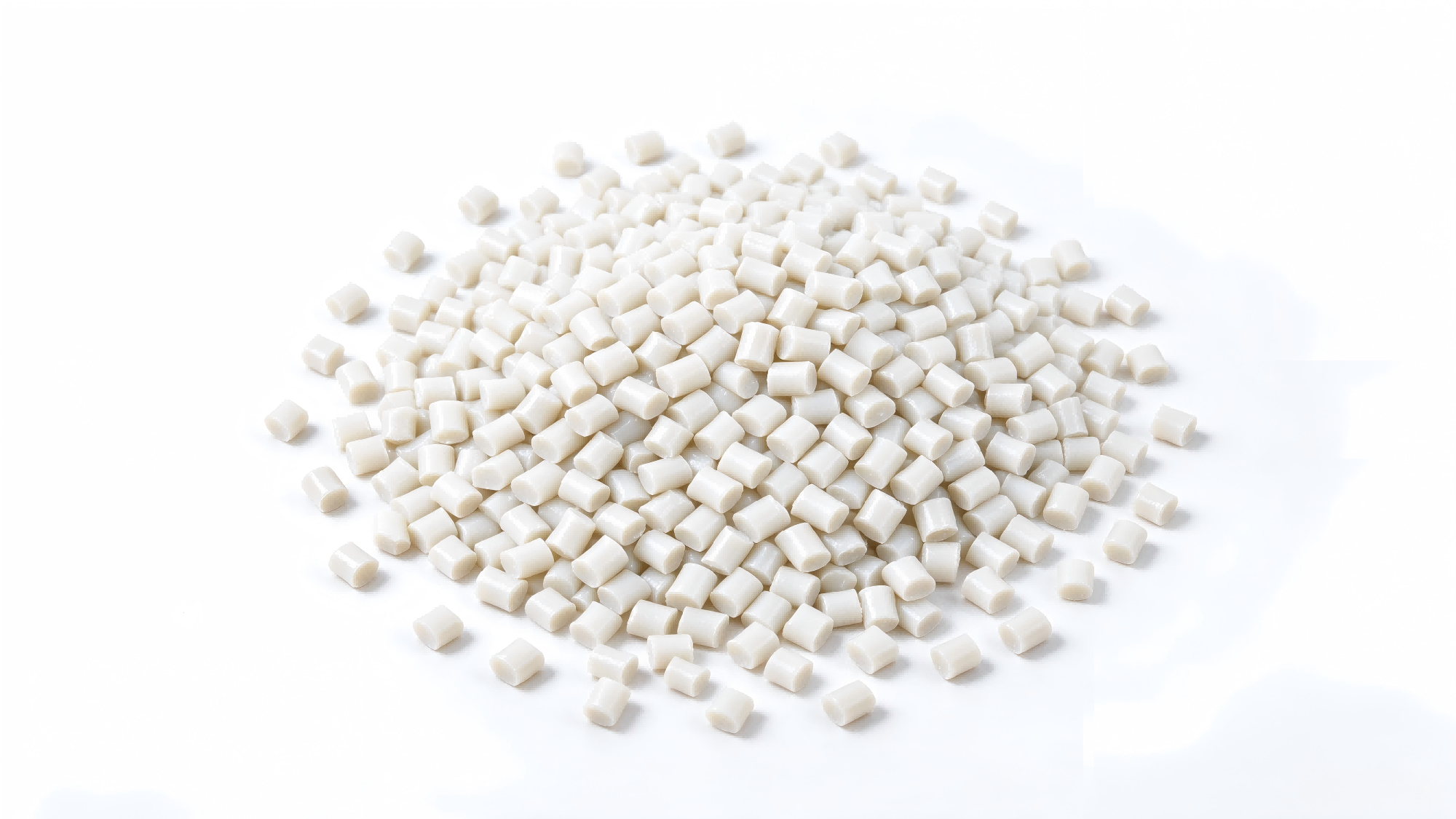
The market for modified nylon in 2026 has failed to follow the smooth recovery trajectory previously anticipated by the industry. Instead, a clear divergence has emerged between PA6 and PA66 regarding costs, supply-demand dynamics, and trade flows. PA6 finds itself caught in a persistent tug-of-war—squeezed between rising raw material costs and weak end-market demand—which continues to weigh heavily on industry profitability. Meanwhile, for PA66, the localization of adiponitrile production has resolved a critical supply bottleneck, leading to a rapid expansion of production capacity; exports have consequently served as a vital pressure-relief valve for absorbing domestic surplus. Furthermore, the electrification of new energy vehicles and shifts in the global tariff landscape are fundamentally redefining the value proposition of modified polyamides.
I. The Dilemma of PA6: Rising Costs Can Drive Up Prices, but Fail to Stimulate Demand
In the first half of 2026, the primary theme in the PA6 market was the divergence between costs and demand. Driven by rising prices for crude oil and pure benzene, the average cost of upstream caprolactam increased by over 14% year-on-year. In contrast, the average price of medium-viscosity, bright-finish PA6 (standard textile grade) rose by only about 10%. Consequently, the price spread between the two narrowed to 400 yuan/ton—a significant compression from the 700 yuan/ton average seen in 2025. This indicates that the strength in costs could not be effectively passed on to the selling price of PA6 chips, causing the industry’s average gross profit margin to slide to approximately -4%.
An oversupplied market further constrained any potential for price recovery. In the first half of the year, domestic PA6 production capacity surpassed 8.4 million tons/year, with an overall industry operating rate of about 65%. While leading enterprises maintained high operating loads, smaller-scale facilities generally operated at less than 50% capacity. Downstream demand from the textile and engineering plastics sectors remained sluggish; passenger vehicle production fell by 5.9% year-on-year, and consumption in the electronics and electrical sectors was similarly weak. Downstream players focused primarily on inventory depletion, resulting in limited incremental consumption of PA6. As of the second half of 2026, there are no clear signs of a fundamental reversal in the recurring cycle of "oversupply—losses—reduced operating rates" that has come to characterize the PA6 industry.
II. The Shift in PA66 Dynamics: Supply Chain Restructuring from Net Import to Net Export
In contrast to the struggles faced by PA6, the narrative surrounding PA66 centers on a structural shift in its supply landscape. For a long time, the supply of adiponitrile—a core raw material for PA66—acted as a bottleneck, constraining the expansion of domestic production capacity. With the successive commissioning and ramp-up of production facilities utilizing the butadiene-based process for adiponitrile, this raw material constraint has been effectively removed, allowing domestic PA66 capacity to surge to approximately 1.5 million tons per year. However, the pace of capacity expansion has far outstripped the growth in domestic demand; with apparent consumption hovering at only around 800,000 tons, the pressure resulting from this supply-demand imbalance has rapidly shifted from the raw material segment to the polymer chip segment.
Exports have emerged as the primary channel for absorbing this excess capacity. From January to August 2026, cumulative PA66 exports reached 158,100 tons—a substantial 42% year-on-year increase—while imports fell slightly to 75,200 tons. This has marked a definitive transition from a "net importer" to a "net exporter" status. East Asia, Southeast Asia, and South Asia serve as the key export markets, with the export-to-production ratio reaching nearly 40% at one point in June. Yet, this surge in export volume has not fully translated into improved profitability. As the price of adiponitrile has retreated from its peak to around 20,000 yuan per ton, the weakening cost support has kept PA66 chip prices under persistent pressure, further intensifying commoditized competition within the engineering-plastic grade segment. The path forward for PA66 lies not in "selling more," but in "selling products that are harder to replace."
III. Electrification and Trade Barriers: A Shift in the Demand-Side Drivers for Modified Nylon
The traditional demand base for modified PA6/PA66—namely the automotive (driven by lightweighting) and electrical/electronics sectors—is being reshaped by two concurrent forces. On one hand, the rising penetration of new energy vehicles (NEVs) does not automatically translate into a proportional increase in the consumption of modified nylon. The widespread adoption of 800V high-voltage architectures imposes more rigorous requirements for electrical insulation, heat resistance, and flame retardancy. To be utilized in high-value applications—such as battery pack enclosures, high-voltage connectors, and power electronics packaging—halogen-free flame-retardant PA6/PA66 must meet a comprehensive suite of standards, including UL 94 V-0 ratings, specific Glow Wire Ignition Temperatures (GWIT), and Comparative Tracking Index (CTI) values. Furthermore, the use of glass fiber-reinforced PA in battery module frames and inverter housings is shifting away from the broad, generalized concept of "replacing steel with plastic" toward a precise alignment with requirements for dimensional stability, hydrolysis resistance, and long-term thermal aging performance.
On the other hand, uncertainty surrounding trade policy has become a persistent disruptive variable for the global supply chain of modified nylon. Anticipated adjustments to the U.S. tariff framework have triggered global concerns regarding supply chain restructuring, with a growing trend toward regionalized procurement and "friend-shoring" among clients in the automotive and electrical/electronics industries. Consequently, the competitiveness of modified PA6/PA66 is no longer determined solely by cost and performance; it now also hinges on the geographical resilience of the supply chain—specifically, the ability to consistently deliver the exact same certified material grade to key customers, even in the face of tariff shifts or logistical disruptions.
IV. The Way Forward: A Race Between Phasing Out Low-End Capacity and Making a Breakthrough in the High-End Market
The core challenge currently facing the modified PA6/PA66 industry can be summarized as a misalignment between the "inertial expansion of low-end production capacity" and the "protracted certification cycles required for high-end applications." A significant portion of the 8.4 million tons of PA6 capacity and nearly 1.5 million tons of PA66 capacity remains concentrated in general-purpose injection molding and low-value-added resin grades; this, in turn, fuels homogenized competition that drives down prices in export markets. Meanwhile, in emerging sectors—such as the "three core systems" (battery, motor, and electronic control) of new energy vehicles, energy storage battery packs, and high-voltage fast-charging interfaces—the requirements for modified nylon have shifted: the question is no longer merely whether a product exists, but whether it can successfully pass the rigorous, multi-year (often five-plus years) validation cycles mandated by vehicle manufacturers.
The global market for modified nylon continues to expand; valued at approximately $3.16 billion in 2025, it is projected to reach $4.633 billion by 2032, representing a compound annual growth rate (CAGR) of about 5.7%. While this growth is real, it will not be distributed evenly across all PA6/PA66 grades. For suppliers, the competitive watershed beyond 2026 will not be defined by the ability to move higher volumes of resin at lower prices, but rather by the capacity to deliver—and secure customer certification for—products that strike an optimal balance between flame retardancy, high-voltage insulation, long-term thermal stability, and recyclability. While increasing export volumes may alleviate short-term inventory pressures, only the sustained introduction of high-end modified grades can transform a quantitative advantage in "net exports" into a qualitative, structural advantage in "value-based exports."