

Before the heating season has even fully begun in the Northern Hemisphere, a crisis involving "voltage" is already sounding an alarm in the yield reports of electronics manufacturers. As temperatures drop and relative humidity on the factory floor falls below 30% RH, the static electricity accumulated by a person moving through such a dry environment can easily exceed 15,000V. Yet, a typical 01005-package resistor—a mainstream component for 2026—generally has an electrostatic discharge (ESD) tolerance limit of only 50V to 200V. This gap, spanning more than two orders of magnitude, creates an "invisible kill chain" that has long been dangerously underestimated.
Last winter, an SMT production line at a PCBA contract manufacturer in Dongguan, China, experienced a sudden spike in its defect rate—from 0.8% to 3.7%—during the month of December, resulting in over 100,000 RMB in losses from scrapped components. An investigation revealed that the root cause was neither equipment malfunction nor an issue with a specific batch of materials; rather, the humidity in the workshop had dropped to 28% RH. In the same year, a batch of handheld cordless vacuum cleaners suffered widespread failures of their main control boards, with the incidents concentrated between November and February. Failure analysis ultimately confirmed that static electricity—generated by the friction between the vacuum’s brush bristles and the floor—was conducted through the wiring to the main control board, where it caused a breakdown at the input of the DC-DC chip. The insidious nature of electrostatic damage lies in the fact that many failures do not manifest as immediate, total breakdowns. Instead, they present as "latent defects"—components suffer performance degradation yet still pass factory-floor testing. These issues only surface months later, once the products reach end users, often leading to after-sales costs five to ten times higher than the value of the scrapped components themselves.
This risk is not confined to any single region or product category. In semiconductor fabrication plants, 12-inch wafer carriers—made from carbon-fiber-reinforced conductive polycarbonate—must comply with the SEMI-S8 standard for electrostatic protection to prevent electrostatic discharge (ESD) from damaging wafer circuitry. In data centers, where heating systems during winter months lower indoor humidity, the absence of reliable grounding and dissipation paths during internal server maintenance can trigger ESD events, potentially leading to system outages and data loss. Similarly, in the assembly of battery management systems, power electronics modules, and ADAS (Advanced Driver Assistance Systems) components for new energy vehicles, electrostatic damage poses a direct threat to vehicle safety and reliability. As the feature sizes of electronic components continue to shrink and their integration complexity increases, their sensitivity to ESD grows significantly; a discharge of several hundred volts—often imperceptible to the human body—is sufficient to cause permanent damage to integrated circuits, printed circuit boards, and semiconductor wafers.
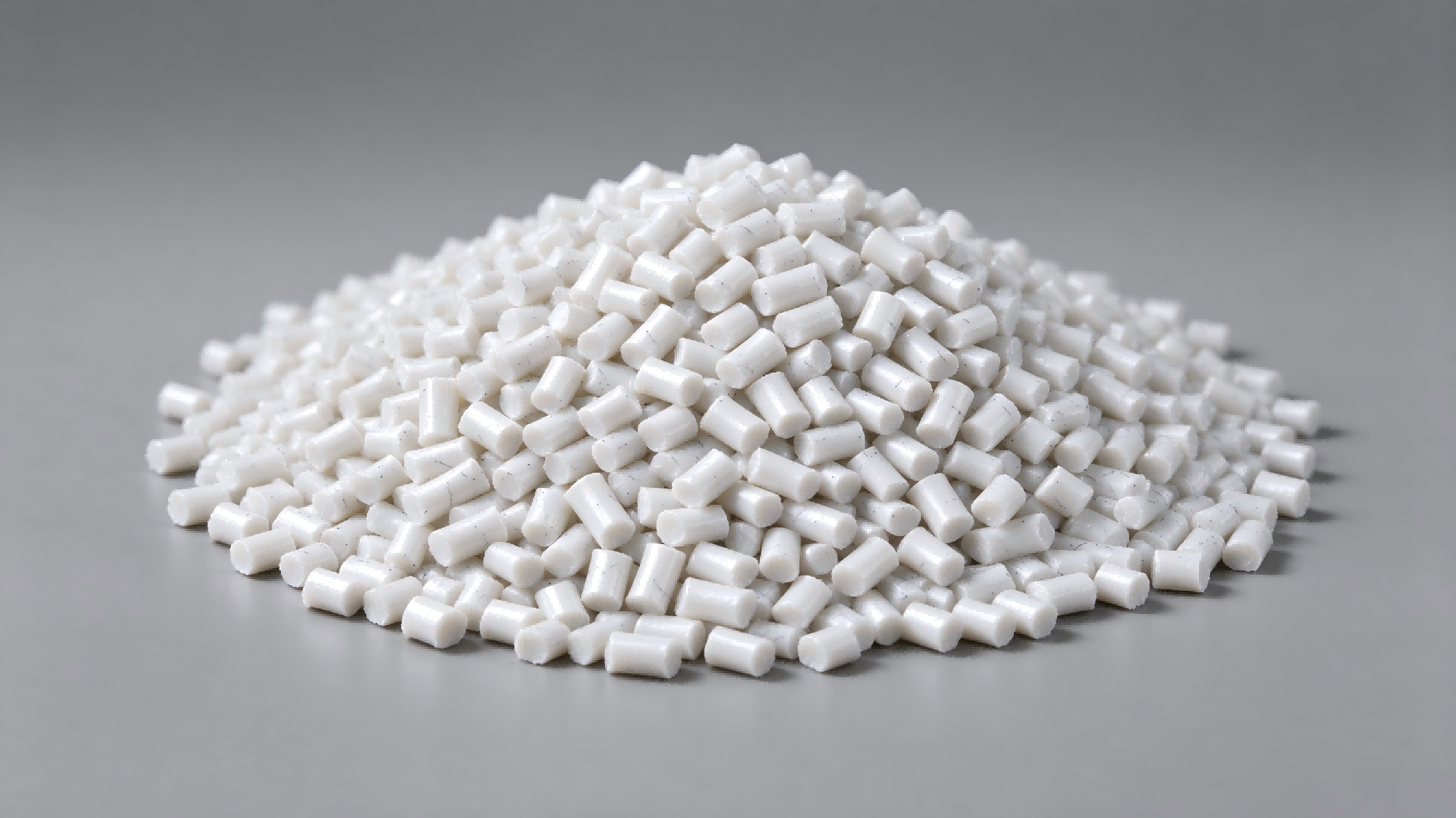
The technical value of antistatic polycarbonate (PC) materials lies in transforming "electrostatic discharge" from a sporadic event—contingent upon environmental conditions—into a reliable, inherent function guaranteed by the material itself. In ESD-modified polycarbonate, surface resistivity is precisely controlled within the dissipative range of 10⁶ to 10⁹ Ω/sq. This avoids both the charge accumulation characteristic of insulators (≥10¹¹ Ω) and the abrupt, intense discharge typical of conductors (<10⁴ Ω), instead allowing electrostatic charges to flow toward a ground point at a controlled, gradual rate. A critical technical distinction concerns "humidity dependence." Conventional migratory antistatic agents rely on atmospheric moisture to form conductive pathways, meaning their effectiveness drops sharply in the low-humidity conditions often seen in winter. In contrast, polymeric permanent antistatic agents establish a conductive network within the material matrix; this ensures that surface resistivity remains stable—fluctuating by no more than a factor of two—even under extremely dry conditions (15% relative humidity). Consequently, during seasons when maintaining workshop humidity is most challenging, the material itself acts as a substitute for environmental control, serving as the primary, dependable line of defense for ESD protection.
Market response has validated this logic. The global market for electrostatic dissipative (ESD) plastics is estimated at $3.528 billion for 2025 and is projected to grow at a compound annual growth rate (CAGR) of 6.90%, with core demand driven by semiconductor manufacturing, electronic packaging, and automotive electronics. Concurrently, regulatory and standard frameworks are tightening. On September 1, 2026, the industry standard SJ/T 12202-2026, "Anti-static Products – Coated Transparent Plastic Sheets," will officially take effect. This standard shifts the focus of evaluation from "initial surface resistance compliance" to long-term stability—assessing performance after exposure to wiping, light, and fluctuations in temperature and humidity—thereby directly targeting the many products currently on the market that boast impressive specifications on paper but fail during actual use. Internationally, the revision of ANSI/ESD S20.20-2021 marks a similarly profound shift: it establishes physical technical parameters (Table 4) as the definitive benchmark, moves away from reliance on ambient humidity in favor of rigorous resistance-value management, and mandates the appointment of an ESD coordinator to ensure centralized oversight—from procurement through quality assurance. This evolution in standards conveys a clear message: ESD protection is no longer a flexible aspect that can be managed merely by "adding humidity" on a seasonal basis; rather, it has become a rigid engineering requirement that must be consistently guaranteed through both materials and systematic processes.
For the global electronics supply chain, this signifies a quiet yet irreversible upgrade in the role of anti-static materials for PC (polycarbonate) applications. No longer merely "auxiliary consumables" used for cleanroom viewing windows, handling trays, or assembly jigs, these materials have evolved into functional production components—integrated directly into wafer carriers, automotive electronic control unit (ECU) housings, server rack assemblies, and data center infrastructure. As the dry air of winter drives up ESD (electrostatic discharge) risks year after year—compounded by the declining voltage tolerance of modern electronic components—certainty at the material level (rather than reliance on managerial vigilance) has become the critical factor that defines the baseline for production yields. Companies that elevate anti-static considerations from a mere "quality department concern" to a core parameter in production line design are the ones truly prepared for the arrival of the next heating season.