

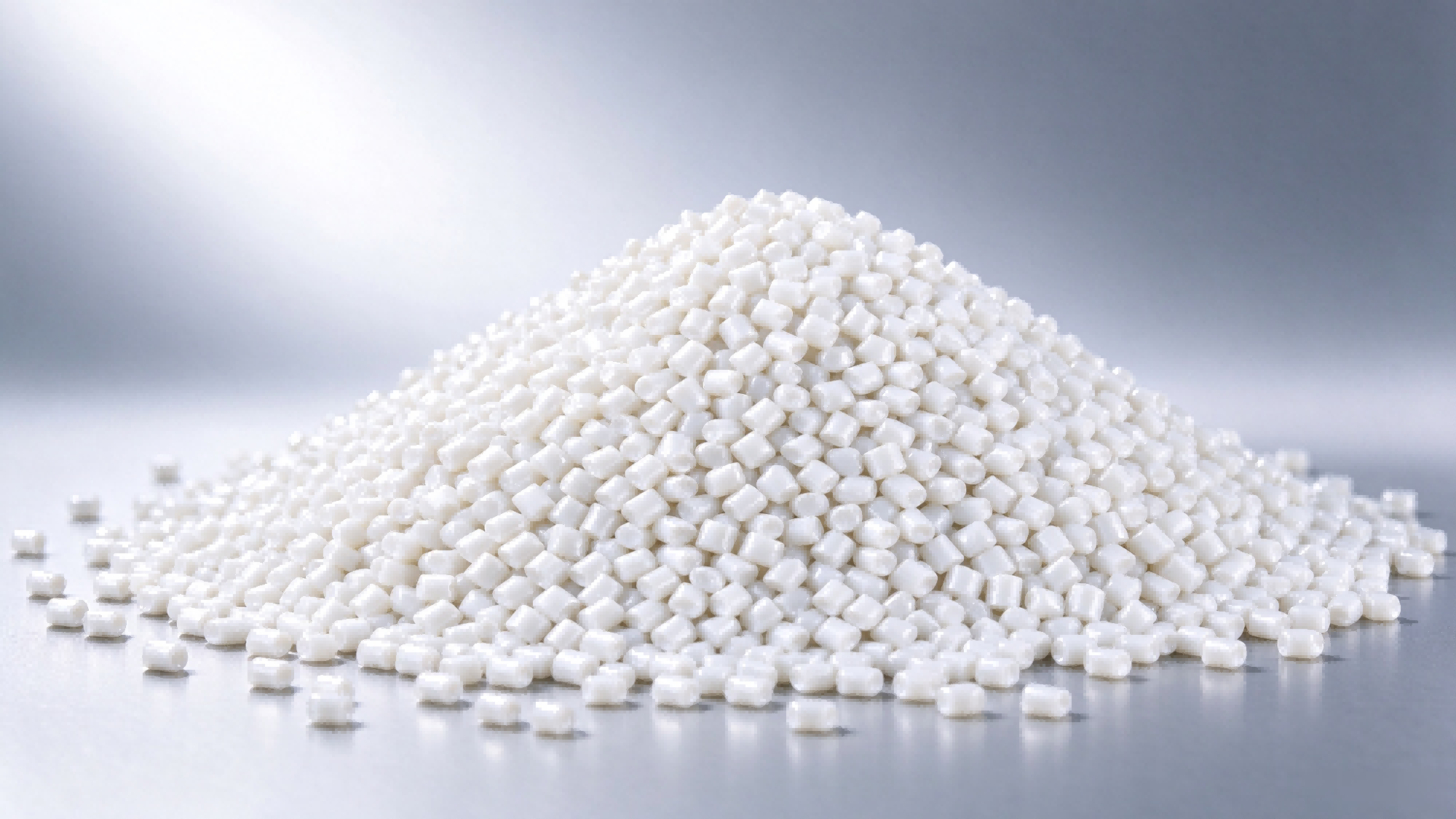
As the global automotive industry accelerates its transition toward electrification and intelligent technologies, innovation in materials science is emerging as an invisible engine driving industrial progress. Just as autonomous driving and V2X communication technologies undergo continuous iteration, plastics—a fundamental industrial material—are also experiencing a profound technological evolution.
For a long time, conventional PP (polypropylene) resin pellets have held an irreplaceable position in consumer goods, packaging, and basic industry due to their low density, chemical resistance, ease of processing, and cost-effectiveness. However, as application environments become increasingly demanding—particularly in sectors requiring high safety and durability, such as battery components for new energy vehicles and housings for high-load electronic appliances—conventional PP has begun to show limitations regarding heat resistance, impact strength, and flame retardancy.
From "General-Purpose" to "Customized": Breakthroughs in Modification Technology
To meet the diverse material performance requirements of modern industry, modified PP resin pellets were developed. This represents not a replacement of conventional PP, but a precise upgrade in performance.
Drawing on industry-leading material performance standards (as shown in Figure 8), modern modified PP pellets achieve significant performance enhancements through the incorporation of specific additives and reinforcing agents. Examples include:
Flame-retardant modified PP pellets: These can be customized to meet specific ratings such as 5VA, 5VB, V0, V1, V2, and HB. Notably, the V0 flame-retardancy grade ensures that the material—at a specific thickness (e.g., 1.5 mm)—self-extinguishes rapidly after the ignition source is removed and complies with rigorous UL94 certification standards.
Glass fiber-reinforced PP pellets: Glass fiber reinforcement dramatically improves impact resistance while minimizing surface fiber exposure and maintaining a pure base color. This material offers excellent stability and can increase the yield of finished products by approximately 5% during precision injection molding.
Empowering Future Mobility and Advanced Manufacturing
Driven by the overarching trend toward automotive lightweighting, the applications for modified PP resin pellets continue to expand. Whether for paint-free automotive interior components, high-temperature-resistant parts surrounding the engine, or flame-retardant protective structures for new energy battery packs, modified materials are driving innovation across the entire industry chain through their stable performance and superior safety standards.
Industry experts note: "The essence of material innovation lies in balance. While retaining the lightweight advantages of traditional polypropylene (PP), modified PP addresses its shortcomings in strength and safety; this synergistic effect is precisely what the manufacturing sector urgently needs today."
Looking ahead, as materials science and blending technologies continue to mature, modified PP plastic granules will play a pivotal role in high-end manufacturing, helping global industry achieve safer and more sustainable development.