

Industry Context: A Materials Revolution—From "General-Purpose" to "Customized"
In the realm of engineering plastics, polycarbonate (PC) has long been a favorite in manufacturing due to its outstanding impact resistance and transparency. However, as downstream applications become increasingly complex, traditional PC has begun to show limitations regarding specific requirements—such as ultra-matte finishes, specific flame-retardant ratings, or tailored light-diffusion effects. Industry analysts note that the market is shifting from a search for "universal materials" to a demand for "precisely customized materials."
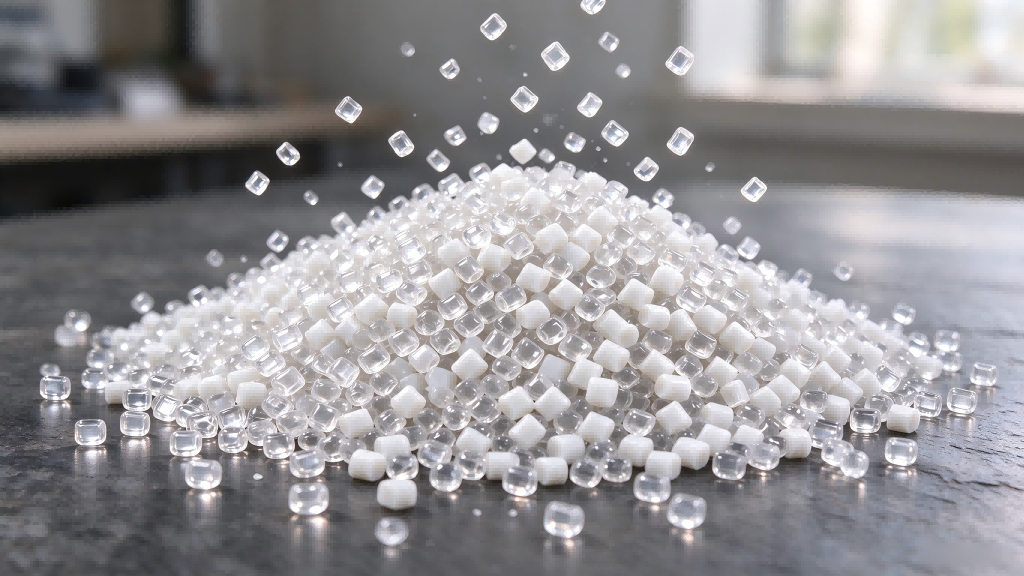
It is against this backdrop that modified PC plastic granules have found vast market potential. Rather than simply replacing traditional PC, these materials retain the core advantages of the original while gaining new capabilities through modification technology.
A Comparative Look: Complementary Performance of Traditional vs. Modified PC
While traditional PC materials typically offer high strength and good heat resistance, they often require additional processing steps—or involve performance trade-offs—when it comes to light diffusion, weather resistance, or specific flame-retardancy standards. In contrast, modified PC granules—such as those introduced by companies like Guangtong Plastics—achieve precise performance tuning through the addition of specific additives or blending processes.
Compared to their traditional counterparts, modified PC granules demonstrate superior performance in several key areas:
Refined Optical Properties: In LED lighting, traditional transparent PC often produces harsh glare. Modified PC light-diffusion materials (utilizing light-diffusing masterbatches) strike a balance between high light transmission and high haze, achieving glare-free, shadow-free light dispersion—an optical effect difficult to attain with standard PC alone.
Enhanced Surface Aesthetics: Traditional PC typically features a high-gloss finish. Modified PC transparent matte materials, however, offer various matte particle sizes (coarse, medium, and fine) and combine excellent surface texture, slip resistance, and impact strength with outstanding aging resistance.
Strengthened Safety and Weather Resistance: Designed for outdoor use or specialized electronic equipment, modified PC incorporates enhanced properties such as UV resistance, cold resistance, and electrical insulation. Regarding flame retardancy in particular, modified PC/ABS materials comply with EU standards and feature halogen-free flame retardant properties; they achieve a UL94 V-0 rating at a thickness of 2.0 mm while offering greater cost-effectiveness than traditional flame-retardant ABS.
Color and Customization: PC materials designed for color matching exhibit exceptional tinting strength and stability, avoiding the color streaking or spotting issues often encountered when coloring traditional PC, thereby meeting the rigorous demands of modern industry for product aesthetic consistency.
Key Application Scenarios for Modified PC Plastic Granules
Smart Lighting: High-transmittance PC and light-diffusion masterbatches are used to manufacture premium LED lamp covers and light guide plates.
Automotive Industry: Flame-retardant PC/ABS, characterized by high tensile and flexural strength, is used for automotive interior components and charging station housings.
Consumer Electronics: UV-resistant, high-flow PC materials are used to produce housings for outdoor electronic devices and transparent protective cases.
High-end Home Appliances: Matte-finish PC materials provide a premium tactile feel and excellent scratch resistance for high-end appliances.
Overall, traditional PC and modified PC are complementary rather than competitive. As manufacturing evolves toward lightweight and precision-oriented designs, modified PC plastic granules—with their customizable flame-retardant ratings, light-diffusion capabilities, and matte finishes—are offering product designers greater creative freedom. Looking ahead, as modification technologies mature further, the adoption of these materials is expected to grow in sectors such as new energy and medical devices.