
I. Industry Background and Product Definition
Amid the trend towards whole-home smart systems, infrared sensor modules—such as those for human presence detection, door and window monitoring, and gesture recognition—are key components for perception and connectivity in smart homes. Conventional plastic enclosures are unable to simultaneously meet the four key requirements of discreet appearance, resistance to ambient light interference, structural protection and infrared signal transmission. Thanks to its selective spectral transmission properties, excellent mechanical strength and environmental resistance, ‘infrared-transmissive modified PC’ has become the mainstream specialised modified plastic for smart sensor windows, light filters and integrated enclosures, finding widespread application in domestic consumer-grade smart hardware and exported IoT electronic products.
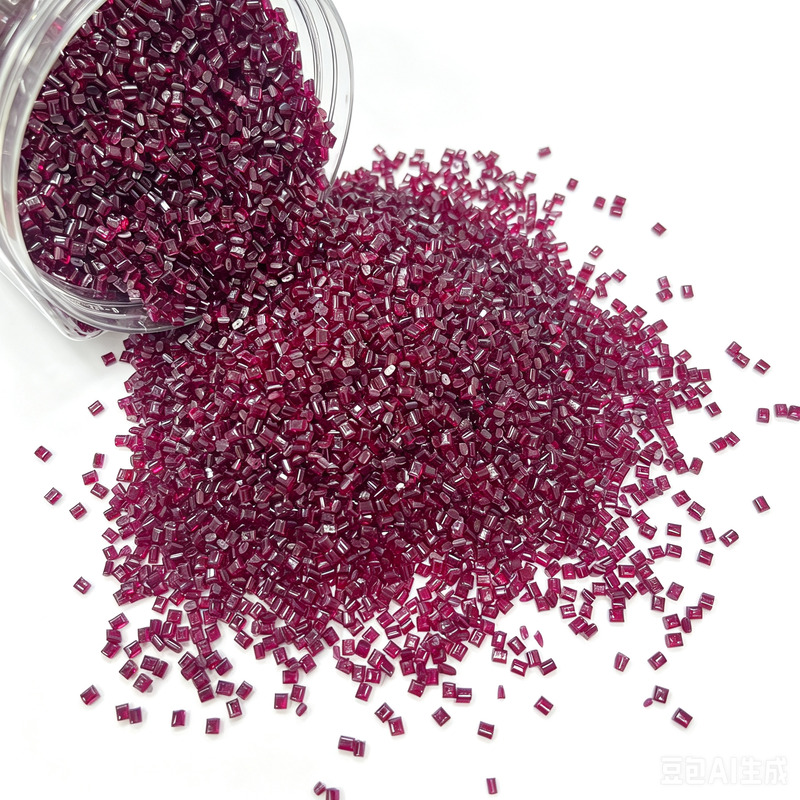
It is produced by blending and modifying a general-purpose PC resin with specialised infrared-blocking colour masterbatches, hydrolysis-resistant additives, thermal stabilisers, UV-resistant additives and flame-retardant additives. By precisely blocking visible light and ultraviolet rays whilst selectively transmitting the near-infrared spectrum, it addresses industry pain points—such as sensor false triggers, unsightly exposed lenses and enclosures prone to ageing and damage—at the material level.
II. Core Optical Principles and Key Optical Specifications
(1) Spectral Filtering Principle
Standard PC is fully transparent across the entire spectrum and cannot filter out ambient stray light, making it prone to false sensor triggers; infrared-blocking PC relies on specialized nanoscale light-blocking pigments to create a spectral filtering barrier:
1. Cutoff Bands: Visible light (400–700 nm) and ultraviolet light (200–400 nm), with transmittance strictly minimized. Visible light transmittance is ≤5%; the high-end matte black model has an even lower transmittance, making the internal circuit board, LEDs, and photosensitive chips completely invisible to the naked eye, ensuring seamless integration into home decor.
2. Transmission Band: The near-infrared range of 700–2000 nm. The smart home industry commonly uses two infrared transmission and reception wavelengths—840 nm and 940 nm—and light in this range can penetrate the material with minimal loss, ensuring stable transmission of infrared signals.
(2) Standardized optical performance parameters (wall thickness: 1.0–1.8 mm; standard wall thickness for sensors)
|
Test Items |
Industry-Standard Parameters |
High-End Custom Parameters |
Application Scenarios |
|
940nm Infrared Transmittance |
88%~92% |
92%~95% |
Compatible with the vast majority of infrared beam sensors and PIR motion detectors |
|
840nm Infrared Transmittance |
87%~90% |
90%~94% |
Facial recognition illumination, fingerprint capture window |
|
Total Visible Light Transmittance |
≤5% |
≤1% |
Hides internal components, eliminates interference from ambient stray light |
|
Haze Value |
≤8% |
≤3% |
No light scattering; ensures precise, drift-free sensor positioning |
|
Supported Infrared Wavelengths |
700~1600nm |
700~2000nm |
Compatible with infrared heat source detection and laser ranging |
Pattern of Wall Thickness Influence: For every 0.5 mm increase in material wall thickness, infrared transmittance decreases by 5% to 8%. Therefore, it is generally not recommended that the sensor window structure exceed 2 mm, in order to strike a balance between structural strength and optical performance.
III. Comprehensive Physical and Chemical Properties (Building on the Advantages of PC Base Material + Modification and Optimization)
1. Mechanical Toughness: Resistant to drops and deformation; suitable for integrated injection molding of structural components
Cantilever beam notched impact strength ≥ 650 J/m; does not fracture at low temperatures of -40°C; excellent tensile and flexural rigidity, enabling the injection molding of ultra-thin snap-fit components and integrated housings with irregular curved surfaces; resistant to cracking and breakage during sensor installation/removal and drop tests, distinguishing it from brittle, fragile infrared-transparent PMMA and infrared-transparent ABS with relatively low toughness.
|
Comparison Criteria |
Infrared-Transparent PC |
Infrared-Transparent ABS |
Infrared-Transparent PMMA |
|
Impact Resistance |
★★★★★ Drop-resistant and low-temperature resistant |
★★★☆ Prone to cracking at low temperatures |
★★☆ Extremely brittle; shatters upon minor impact |
|
Long-term Heat Resistance |
110~120℃ |
75~85℃ |
75–80°C; softens easily at high temperatures |
|
Resistance to Alcohol / Cleaning Agents |
Withstands routine wiping |
Prone to corrosion and discoloration by solvents |
Turns white and cracks upon direct immersion in alcohol |
|
Molding Capabilities |
Suitable for thick-walled, snap-fit, and complex structural parts |
Suitable only for simple, thin-walled enclosures |
Can only be processed into flat lenses; not suitable for structural injection molding |
|
Infrared Transmittance Stability |
Minimal batch-to-batch variation; suitable for mass production |
Additives tend to leach out, causing long-term light transmission decay |
High initial transmittance, but prone to fogging when exposed to moisture |
|
Smart Home Compatibility Rating |
Top choice for all scenarios |
Low-end, simple small appliances |
Used only as standalone optical lenses |
2. Heat Resistance and Temperature Range Compatibility for Long-Term, Stable Use in Multiple Scenarios
Heat Deflection Temperature (HDT): 120–130°C; Long-term operating temperature range: -40°C to 110°C*:
● Sensors in kitchen appliances can withstand high temperatures around stovetops;
● Will not warp or turn white due to alternating hot and cold temperatures in humid bathroom environments;
● Sensors in outdoor doors and windows maintain excellent dimensional stability despite winter-summer temperature fluctuations, minimizing the risk of deformation or jamming.
3. Environmental Resistance (A Core Requirement for Smart Homes)
● Resistance to Damp Heat and Hydrolysis: Designed for smart bathroom environments with prolonged exposure to moisture, these components contain hydrolysis stabilizers. They will not yellow, become cloudy, or experience reduced light transmission even after long-term contact with water, toilet cleaners, or mildly acidic or alkaline cleaning agents;
● UV Resistance and Weather Resistance: Balcony door magnetic sensors and outdoor infrared detectors are formulated with UV absorbers, ensuring they do not fade after years of outdoor sun exposure and that infrared penetration performance does not significantly degrade;
● Chemical Resistance: Withstands wiping with alcohol and common disinfectants without surface whitening or cracking.
4. Flame Retardancy and Electrical Safety, Compliant with Home Appliance Safety Standards
Base model: UL94 HB rating; for high-voltage smart devices, UL94 V-0 halogen-free flame-retardant rating is available upon request. The glow-wire temperature can reach 960°C, with excellent tracking index and insulation resistance parameters. It does not interfere with RF, Bluetooth, or Wi-Fi wireless signals and fully complies with the IEC 60335 safety standard for household appliances, passing product certifications such as 3C and UL.