

By 2026, intelligent sensing is transitioning from an "optional feature" to a standard component in end-user products. Smart door locks utilize infrared (IR) illumination for facial recognition; in-vehicle systems employ IR sensors to monitor driver status; and proximity sensing in smartphones and tablets—as well as remote-control signal reception in televisions and air conditioners—all rely on an optical path invisible to the human eye. This path is typically facilitated not by glass, but by specially modified engineering plastics. Consequently, IR-transmissive materials have moved from the niche realms of industrial and military applications to the forefront of consumer electronics and automotive electronics.
Market data confirms this shift. According to Global Info Research, the global market for IR-transmissive plastics was valued at approximately $713 million in 2025 and is projected to reach $1.217 billion by 2032, representing a compound annual growth rate (CAGR) of 7.9% from 2026 to 2032. In China, driven by the rapid expansion of smart homes, automotive intelligence, and security surveillance, the market for IR-optical plastics has surpassed 7 billion RMB, with a CAGR exceeding 15%. The trend of domestic substitution is evolving from merely "achieving availability" to "ensuring high performance." Meanwhile, downstream requirements for these materials have become increasingly nuanced: they must not only allow the transmission of infrared wavelengths but also effectively "conceal" components from the visible spectrum, all while meeting stringent criteria for injection molding, weather resistance, and mechanical strength.
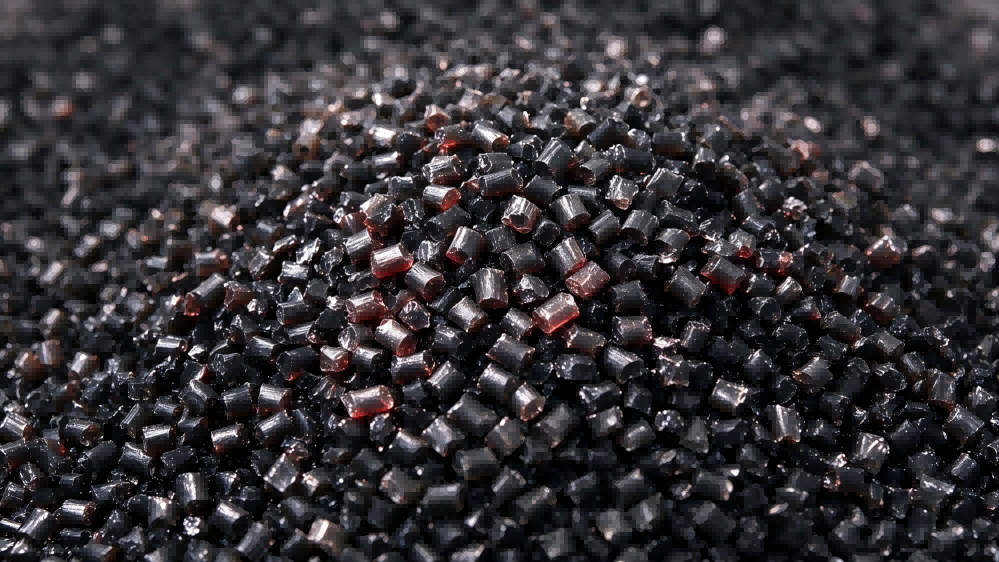
Within this material sector, the IR-transmissive PC, PMMA, and PS-based offerings from Guangtong Plastics serve as a notable case study. Polycarbonate (PC) provides impact resistance and dimensional stability; polymethyl methacrylate (PMMA) contributes optical clarity and surface hardness; and polystyrene (PS) offers a balance between cost and processability (flowability). Through specialized modification, these materials enable efficient transmission across infrared spectral ranges—typically covering the 3–5 micron and 8–12 micron bands—while minimizing the absorption of infrared energy. This means the material can be used for infrared (IR) remote control receiver windows, protective covers for IR cameras, optical components for night-vision equipment, and even as the front-facing layer for fingerprint recognition modules in smart door locks—allowing functional components to remain "hidden" within structural elements, thereby preserving the seamless appearance of the end device.
On a deeper level, this signals a shift in supply chain dynamics. Previously, the supply of high-end IR-transmissive optical plastics was concentrated among a few international chemical giants, characterized by long lead times for imports and high barriers to customization. Now, domestic modified-plastic enterprises—such as Guangtong Plastics, which focuses on "specialized, refined, unique, and innovative" (SRUI) development—are expanding their material capabilities beyond general-purpose light-diffusion or flame-retardant plastics into the specialized niche of IR-transmissive materials. The challenge here lies not in achieving a single performance metric, but in ensuring batch-to-batch consistency and adaptability across diverse use cases: automotive applications require stable transmittance over a wide temperature range; consumer electronics demand optical uniformity in thin-walled injection-molded parts; and security equipment necessitates resistance to yellowing after prolonged UV exposure. Companies that can deliver mass-producible formulations capable of meeting these complex, overlapping requirements will be well-positioned to lead the next phase of domestic substitution.
From a broader perspective, the growing interest in IR-transmissive materials is essentially a reflection of the increasing "sensing density" within smart devices. As every device gains the capacity to "see," "measure," and "respond," optical windows are no longer mere accessories; they have become critical functional interfaces that determine the overall reliability of the device. The value of PC/PMMA/PS-based material systems lies in their design flexibility and high molding efficiency, allowing them to take on roles traditionally reserved for glass or crystalline materials. While Guangtong Plastics’ current material portfolio may not yet be enough to redefine the entire industry landscape, the path it represents is clear: the competitiveness of domestic IR-transmissive optical materials is shifting from simple "import substitution" toward "deep integration into specific application scenarios."